How to save Money Sewing Your own clothes
Some people assume that you save money sewing your own clothes. I mean, you’re not paying for someone else to do it so wouldn’t it be?
Well, it’s not quite that simple.
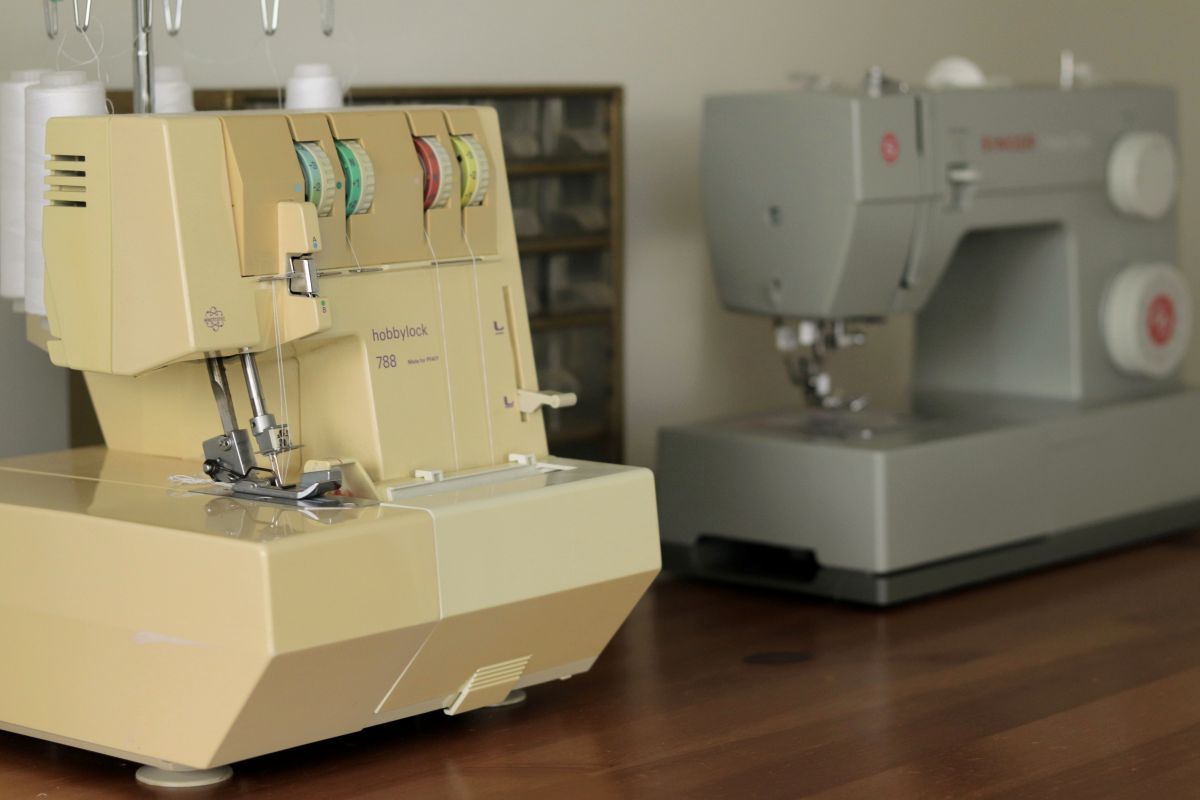
There’s a lot that goes into sewing your own clothes. First off, you’re going to need a sewing machine which is almost guaranteed to be expensive . Then there’s all the little tools and notions for each project and those can add up. That doesn’t even include the fabric which can get really pricy really fast.
So, can you save money sewing your own clothes?
Yes, you can. You just have to be very intentional about how and where you source your supplies. I’ve made multiple replications of items that would have cost me over $100 that I made for just $10. In this post I’m going to share how I save money sewing my own clothes so you too can create pieces for your wardrobe on a small budget.
ways to save money on sewing tools and equipment
Find A Second Hand Sewing Machine
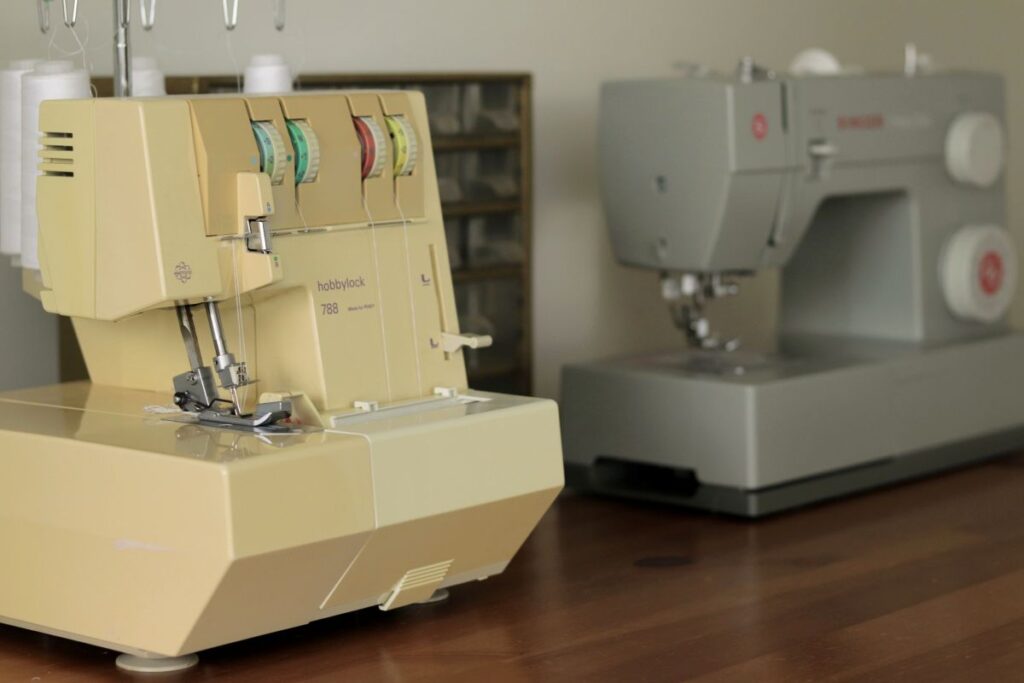
Sewing machines are one of the biggest expenses when you first start sewing. The best way to save money on a machine is to get one second hand. Maybe you have a family member or friend who has a machine sitting tucked away in storage that you could buy off them or they would be willing to give you. You could also check Facebook Marketplace or your local thrift store, just make sure it works properly before you bring it home.
When looking into getting a sewing machine you don’t need all the fancy settings some machines come with. Sure, some of those settings can be helpful but if you’re trying to save money then stick to a more basic machine. All you really need is a straight stitch and a zigzag stitch. Those extra decorative stitches are just that: extra.
When getting a sewing machine second hand, see if you can find the manual online if it doesn’t come with one. The manual can be really helpful with troubleshooting issues and learning how to properly use your specific machine.
Start With the Basic Tools
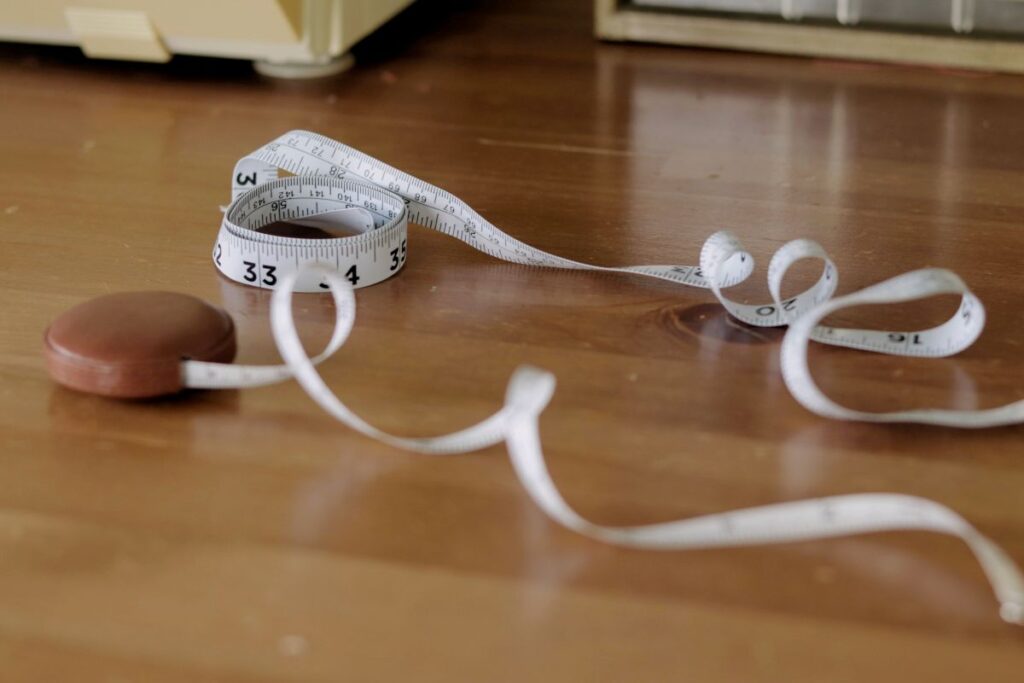
There are so many different sewing tools out there that can help make different parts of sewing easier. There are the necessary tools and then there are other tools that are helpful but not essential. When you’re on a budget, focus on getting those essential tools first. Over time you can start to collect those other tools bit by bit to help you on your sewing journey.
If you’re wondering what the essential sewing tools are I made a post all about that and how to use them. You can check out the post here if you want to learn a bit more about these must-have tools.
Your Tools Don’t Need to be Fancy
There is a wide range of sewing machines out there. You can spend anywhere from $160 to over $1000 on a sewing machine alone. Fabric scissors can get up to $50 for a pair. Then you’ve got the cost of all the other tools you need and it starts to add up.
But you don’t need to start out with the best quality tools. I started out with $20 fabric scissors and used them to also cut my threads instead of having smaller embroidery scissors. They weren’t the smoothest cutting scissors and they got a little stiff after a few months but they did the job. Then for Christmas one year I was gifted a pair of quality scissors that are still cutting beautifully. My first sewing machine was a older one I found second hand on Facebook Marketplace. It didn’t have a lot of settings that newer machines had but it ran and I was able to start learning and making clothes on it. I saved up and upgraded to my new Singer sewing machine a couple years later, and I was actually able to sell my old one to help cover the cost.
If you’re on a tight budget just get what you need so you can start. As money comes you can start replacing what needs replacing and upgrading to those higher-end tools. You could create a wish list of the things you want to upgrade and check them off as you’re able. But don’t focus on getting all the fancy things right away if it isn’t realistic for you.
How to save money by thrifting
The biggest way I save money sewing is by thrifting. Thrifting is something I really enjoy. It’s like a treasure hunt for the perfect item, and it’s also saved me hundreds of dollars. If you have a thrift store near you and you’re on a budget I highly recommend you utilize it to help you sew pieces you love without breaking the bank.
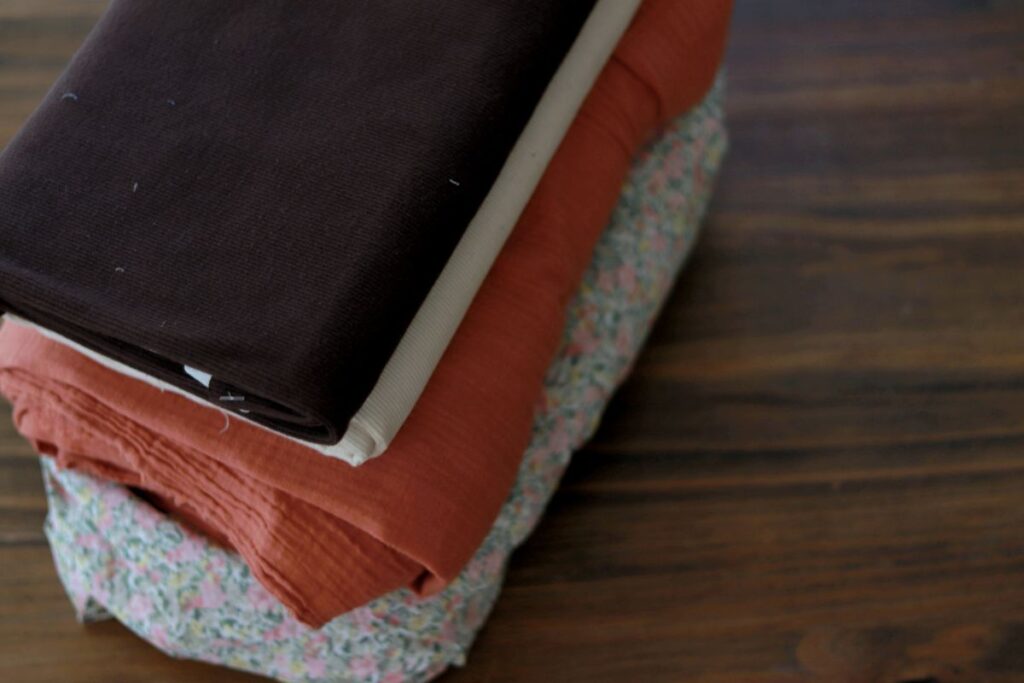
Thrift Your Fabric
Fabric is one of the biggest, if not the biggest, cost to sewing. Every time you start a new project you need to go out and get the fabric for it. You could spend anywhere from $30-$100 for fabric for one project alone.
I love walking through fabric stores and seeing the selection of beautiful fabrics, but that’s not where I get the majority of my fabrics. I thrift them, and I’ve saved hundreds of dollars doing it.
There are three places I check for fabric when thrifting: the bedding section, tablecloths, and materials. The bedding section is a great place to find large amounts of fabric for cheap. This is where I source most of the cotton fabrics I use for my projects and I like to keep a white sheet on hand to use for lining if a fabric I’m using is too sheer.
I’ve come across some really nice linen tablecloths before so I like to do a quick look in this section. Sometimes you can find some nice lacey or embroidered fabrics as well that you could use for a piece or you could take the embroidered sections out and add them to other fabric for extra detail. I don’t often find much in this section but it’s still worth checking out.
Lastly, and this is my favorite place to look, is the materials section. This is where they put extra material people have donated from their own projects. I’ve collected a wide variety of beautiful fabrics from this section. Corduroys, jersey, cotton gauze and eyelet cotton. You can find some really nice fabrics for a really good price in this section of the thrift stores.
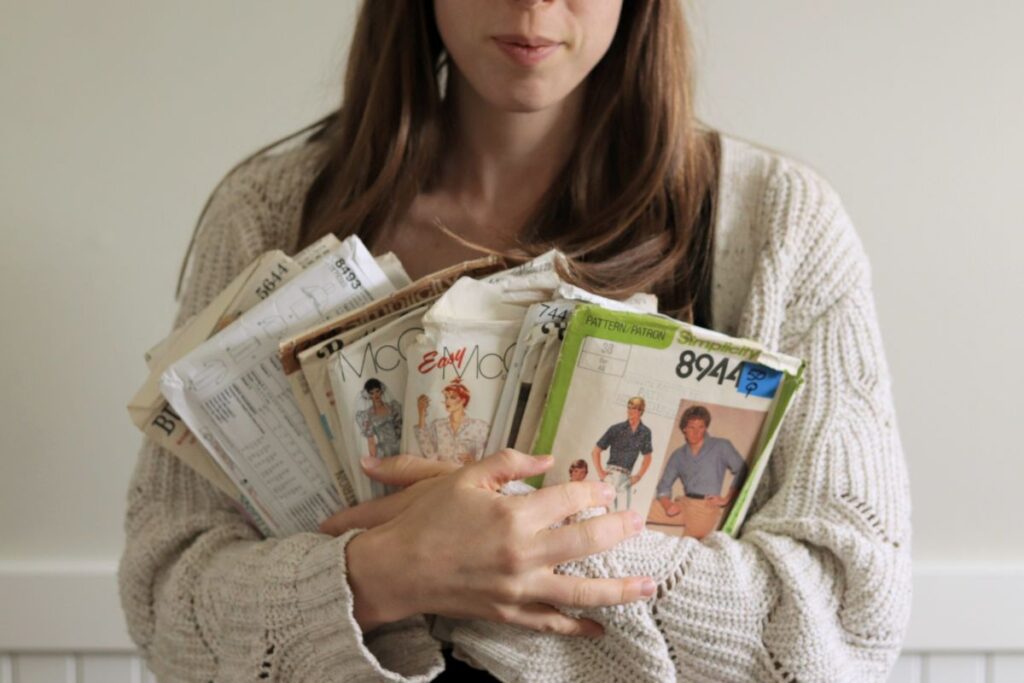
Thrift Sewing Patterns
Some sewing patterns are relatively cheap while others can be pretty pricey. I love checking thrift stores for vintage patterns. Not only are they inexpensive but I also love recreating vintage style clothing. You can also check Facebook Marketplace. People often put batches of vintage sewing patterns for sale that they are trying to get rid of.
Vintage pattern can be a little tricky to work with though. The instructions aren’t laid out or worded like modern sewing patterns and the language can be a little confusing sometimes. You may want to get some experience with other patterns first before giving a vintage pattern a try.
If you want to buy a new pattern but have a tight budget, check for sales or stock up on a few on Black Friday when they should be less expensive.
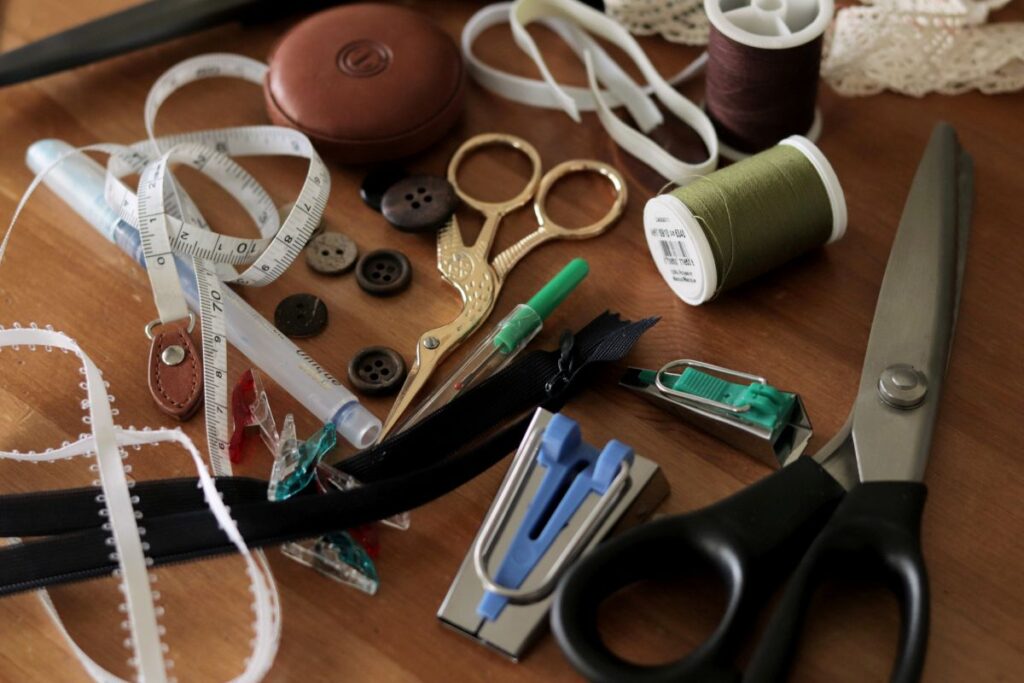
Thrift Your Notions
You’d be surprised at the amount of notions you can find at thrift stores. Trim, buttons, and zippers are usually not to hard to find. They usually have them all thrown together in a bag so you end up with some you like and some you’ll just donate right back. But you can get them for really cheap this way.
Another option is to salvage notions from other pieces of clothing. Say you find a top and the buttons down the front would be perfect for the project your working on. Or a dress has the exact color of zipper you need. You could get that piece of clothing and take the buttons and zip off of it to use for your own project. If you can find a way to repurpose the rest of the piece as well, even better!
Sewing doesn’t have to be really expensive. It’s up to you how much you want to spend on it and if you don’t have a large budget you can still make it work. Be intentional about where you shop, take your time building your tool collection, and have fun hunting down the perfect fabric. It may not be as nice as having all the tools or picking out your favorite fabric from the fabric shop. But trust me, if you have a small budget then it will be worth it.
Are there any ways you save money sewing that I didn’t mention here? I’d love to know! Best of luck on your sewing journey!