How to take your body measurements

Before you cut out your first pattern there’s something you need to do first. That is taking your body measurements. Even though you usually wear a size small, for example, that doesn’t mean the size labeled as small on the pattern will fit you.
Each pattern usually has some kind of chart listing the measurements and the sizes so you can find the one that will fit you best. You’re going to want to refer to this when choosing your size and find the size that is closest to your measurements.
If you’re wanting to draft your own pattern there are a number of measurements you’re going to need. If you’re using your measurements to figure out your size for a pattern then there are three areas you are going to need measurements for: your bust, waists, and hips. Whether you’re making pants or a skirt, a jacket, a top, or a dress, you’ll need at least one of these measurements which is why we’re going to focus on these ones.
How to properly measure yourself
When taking your measurements, it’s best if you take them in your underclothes to be as accurate as you can be. Wearing bulky clothing will add to your measurements and skew what they actually are. If you have someone who can help you take your measurements it can make finding them easier, but you can do it on your own as well.
Standing in front of a full length mirror makes the process much easier and more accurate, especially if you don’t have someone helping you. When taking your measurements, you want to make sure the tape measure is sitting straight, parallel to the floor, and not sagging. This will add to your measurements and make them less accurate.
Hold the tape measure tight enough that it doesn’t fall down or slip but loose enough that it’s not moving when you breathe. It should just sit comfortably around you without moving or restricting you.
Measuring your bust

To find your bust measurement, place the measuring tape around the fullest part of your bust. Remember, it should be tight enough that it doesn’t fall down but not so tight that it loosens as you breathe. The back of the tape measure should sit about where your bra strap is. Try keep your arms in a relaxed position. I know this can be tricky but raising your arms can change the measurement a bit. You can hold the tape measure in the middle of your bust if this helps put your arms in a more relaxed position. This is where having someone help you can be much easier, then you can simply put your arms down. If you don’t have that luxury, just do your best to get it as accurate as you can.
Jot your bust measurement down on a note somewhere or on your phone. You’ll be using this over and over until you have your measurements memorized or need to take them again due to body changes.
Measuring your waist
The waist is one of the harder ones to find. Where really is your natural waist? Is it where your hipbones are? Where your bellybutton is? It can be confusing because when we think of our waist we think of where the waist of our pants sit. But that may not be where your natural waist really is.
Fortunately, there’s actually a little trick to finding it. Place your hand on your side and lean over it. That area where your hand sinks into your side, that is where you want to measure your waist.
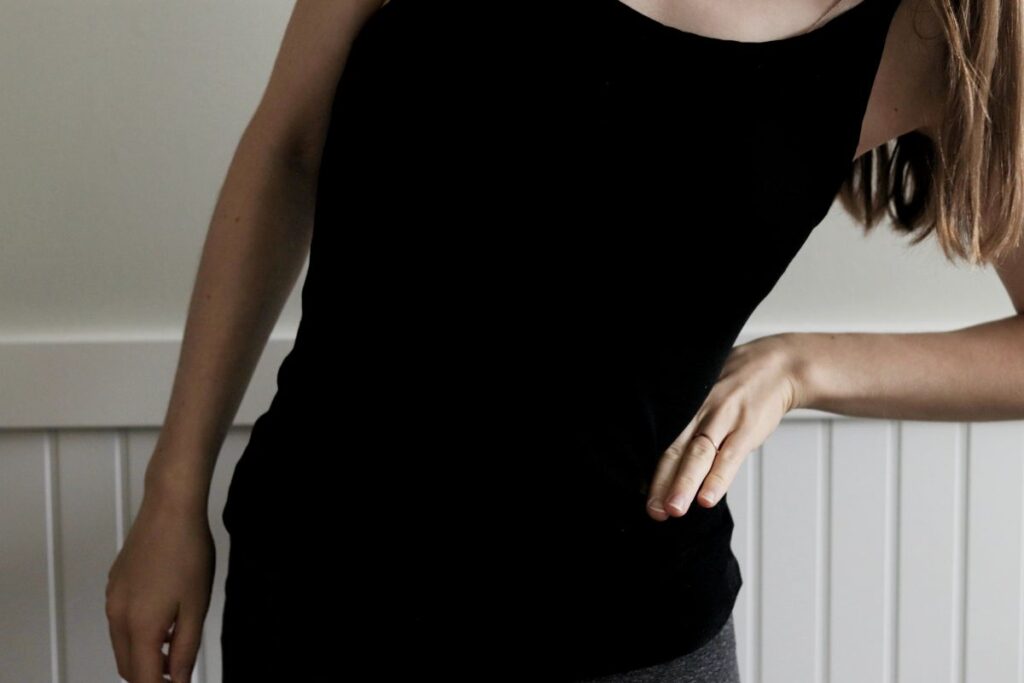
Place your tape measure around this spot to get the right measurements for your waistline. Measure the same way you did for your bust, not too loose or too tight making sure the tape measure is straight.

Add this measurement to your note and you’re ready for the last measurement you’ll need.
Measuring your hips
Again, you may be thinking that for your hips you’re going to measure where your hip bones are. Guess again! For your hips, you’re going to to place the measuring tape around the fullest part of your bum. Having a mirror is especially helpful for this part so you can clearly see what you’re doing and can make sure the tape measure is straight. Make sure you use the same techniques you used for the other two measurements to get it as accurate as you can!

Add this last measurement to your notes and you’re all set for finding the best size for you in any pattern.
Why is getting an accurate measurement so important?
Measuring yourself incorrectly can lead to fit issues down the road. The goal is to have clothes that fit you well and sloppy measuring can lead to poor fit on a garment you spent hours making. I don’t want that for you!
Getting your measurements can be a little tricky if it’s your first time. Don’t worry if it’s not 100% spot on, we just want to git it as close as possible so you can be sure to choose the best size for you when cutting out your pattern.
What if I need other measurements?
Some patterns may list other measurements like bicep or forearm if you’re making something that has elastic sleeves, or back length for tops so you know how long it will be on you. Any measurement where you place the tape around your body will be measured the same way as your bust, waist or hips. Most other measurements are pretty self explanatory and will sit where you would expect them too. If you’re trying to get your back length measurement you might need someone else to help you as doing this on your own can be a bit challenging.
Now that you have your measurements written down to refer to, you can confidently find patterns that will best fit your body so you can fill your wardrobe with clothing that you love and will wear on repeat for years. Best of luck on your sewing journey!